Disney World Food: How Dining Actually Works
On this page 6
Disney World food splits into two systems that work very differently, and knowing which one you're using changes how your whole day runs. Quick service means you order at a counter or through the app, get a tray, and find your own seat — closer to fast casual dining, done in fifteen to thirty minutes. Table service means a host seats you, a server takes your order, and the meal runs sixty to ninety minutes. Both exist all over every park, and most families use a mix of the two across a trip.
The dining wishlist sheet in the free Disney World First-Timer Planning Binder turns this into an actual plan — which meals to book ahead, which to leave flexible, and where the must-try snacks fit in.
Quick service vs. table service: the real tradeoff
Quick service costs less and takes less time, which makes it the default for lunch on a day packed with rides. You lose the sit-down break and the fuller menu, but you gain thirty extra minutes in the park.
Table service costs more and takes longer, but it buys something quick service can't: air conditioning, a real chair, and a planned pause in a long day. Many table-service restaurants take reservations weeks ahead, and the popular ones fill up fast. If there's one restaurant you care about, booking it before you even land is worth doing.
A reasonable pattern for a first trip: quick service for most lunches, one or two table-service dinners spread across the week, and flexibility built in for the days that don't go as planned.
Mobile ordering is the single biggest time-saver
The official park app lets you order quick-service food ahead of time, pick a pickup window, and skip the ordering line entirely. You still wait for the food itself, but you skip the line that forms just to place the order — which, at busy times, can be the longer of the two.
Order about twenty to thirty minutes before you actually want to eat, then head toward the location so it's ready close to when you arrive. Waiting until you're starving and standing at the counter is the version of this that doesn't work well.
Snack culture is part of the experience
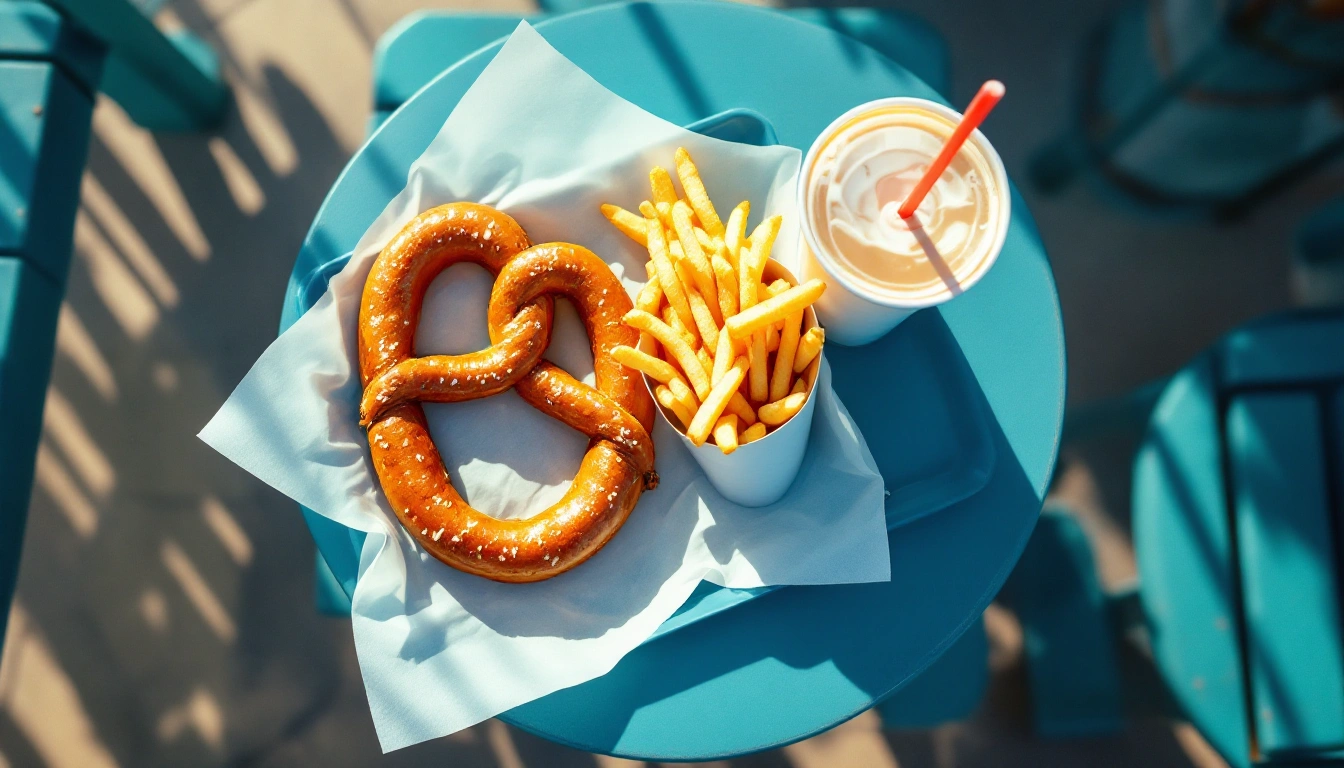
Disney World snacks are treated as their own category, not an afterthought. Giant turkey legs, specialty popcorn buckets you can refill for a discount, and themed ice cream treats all show up across the parks, and part of a first-timer's day is genuinely built around grazing between rides rather than sitting down for full meals.
Budget both money and stomach space for this. A family that plans three full meals and ignores snacks usually ends up skipping the snacks they actually wanted, or blowing the food budget on them unplanned. Treat snacks as their own line item from the start.
Allergies and dietary restrictions are well handled
This is one of the genuinely strong parts of the system. Disney World supports common allergies and diets — gluten-free, dairy-free, nut allergies, vegetarian and vegan — at both quick-service and table-service locations, and most restaurants can flag a dish or offer a substitute without much friction.
The move is to flag it early. Note allergies when you book table-service reservations, and ask a chef or manager to come talk through options when you arrive at a counter. It's a normal request, not a special one, and the parks are used to handling it daily.
A realistic daily food budget
Costs shift a lot by trip style, but ranges help more than guessing. A family leaning on quick service and snacks, with maybe one table-service meal across the whole trip, tends to land on the lower end of the daily food budget. A family booking table service most nights and adding specialty snacks and drinks throughout the day lands much higher.
As a rough frame: quick-service meals per person tend to run in the low-to-mid double digits, table-service meals run meaningfully higher per person, and snacks add up faster than people expect once you're buying two or three a day per person. Building a daily food budget as a range, not a fixed number, makes it easier to adjust once you see how the first day or two actually goes.
Making a plan before you go
The biggest food mistake first-timers make isn't picking the wrong restaurant. It's not deciding anything ahead of time and then trying to figure it out hungry, mid-afternoon, standing in a crowded plaza. A short list of must-try snacks, one or two booked table-service meals, and a rough daily budget solves most of that before the trip even starts.